Showing posts with label chalk fragrant orchid. Show all posts

Wednesday, 5 June 2024

Adventures in Orchidaceae pt 11 .. big lizards walk the land once more ..

Another day of orchid hunting and another Big Day Out given the quality of species encountered!
Pyramidal Orchid
(Anacamptis pyramidalis)

Bee Orchid
(Ophrys apifera)


Lizard Orchid
(Himantoglossum hircinum)

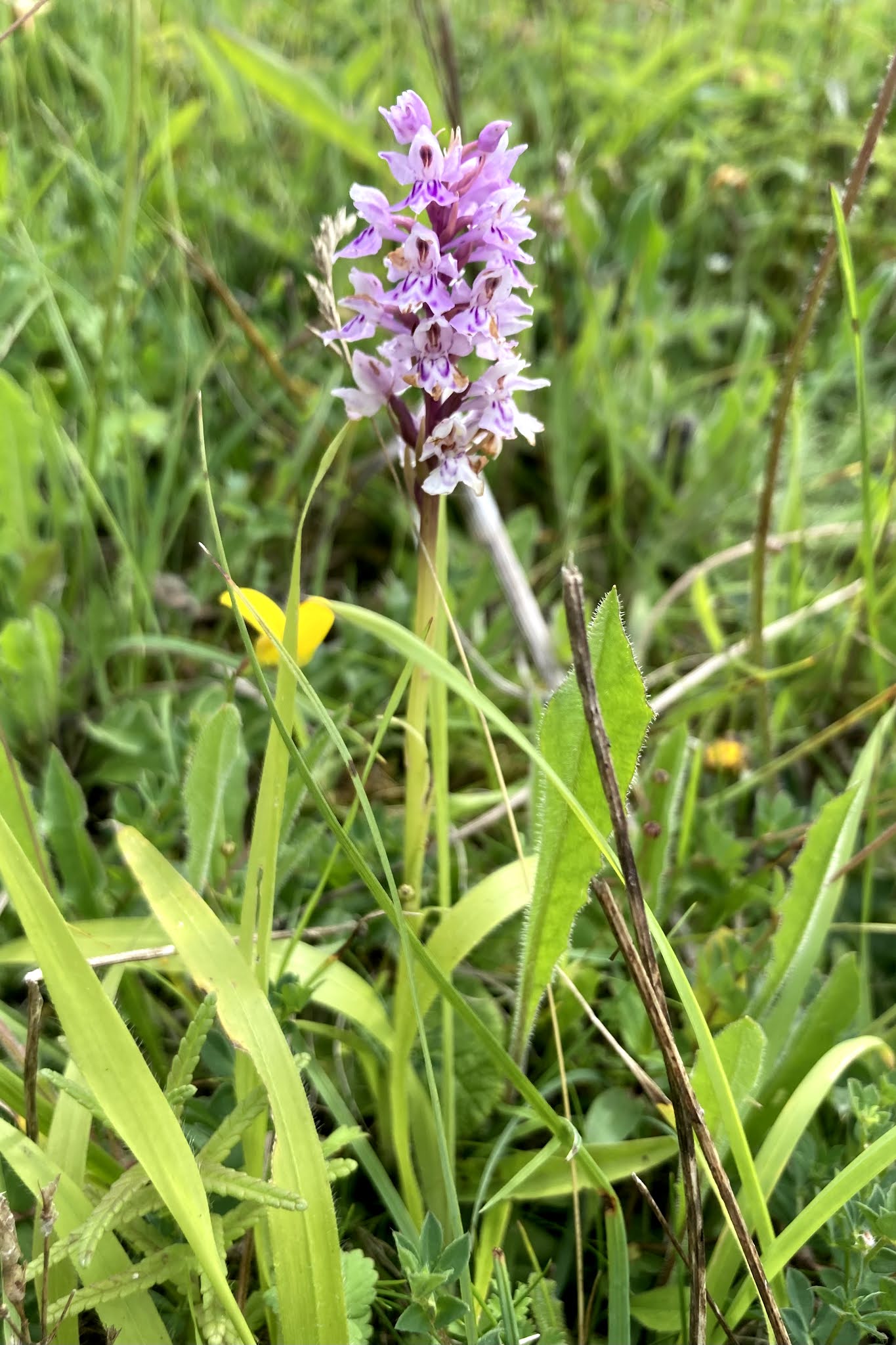
Common Spotted-orchid
(Dactylorhiza fuchsii)

Field Cow-wheat
(Melampyrum arvense)

Ivy Broomrape (Orabanche hederae)

Bee Orchid

Common Twayblade
(Neotiia ovata)

Greater Butterfly Orchid
(Plantantera chlorantha)

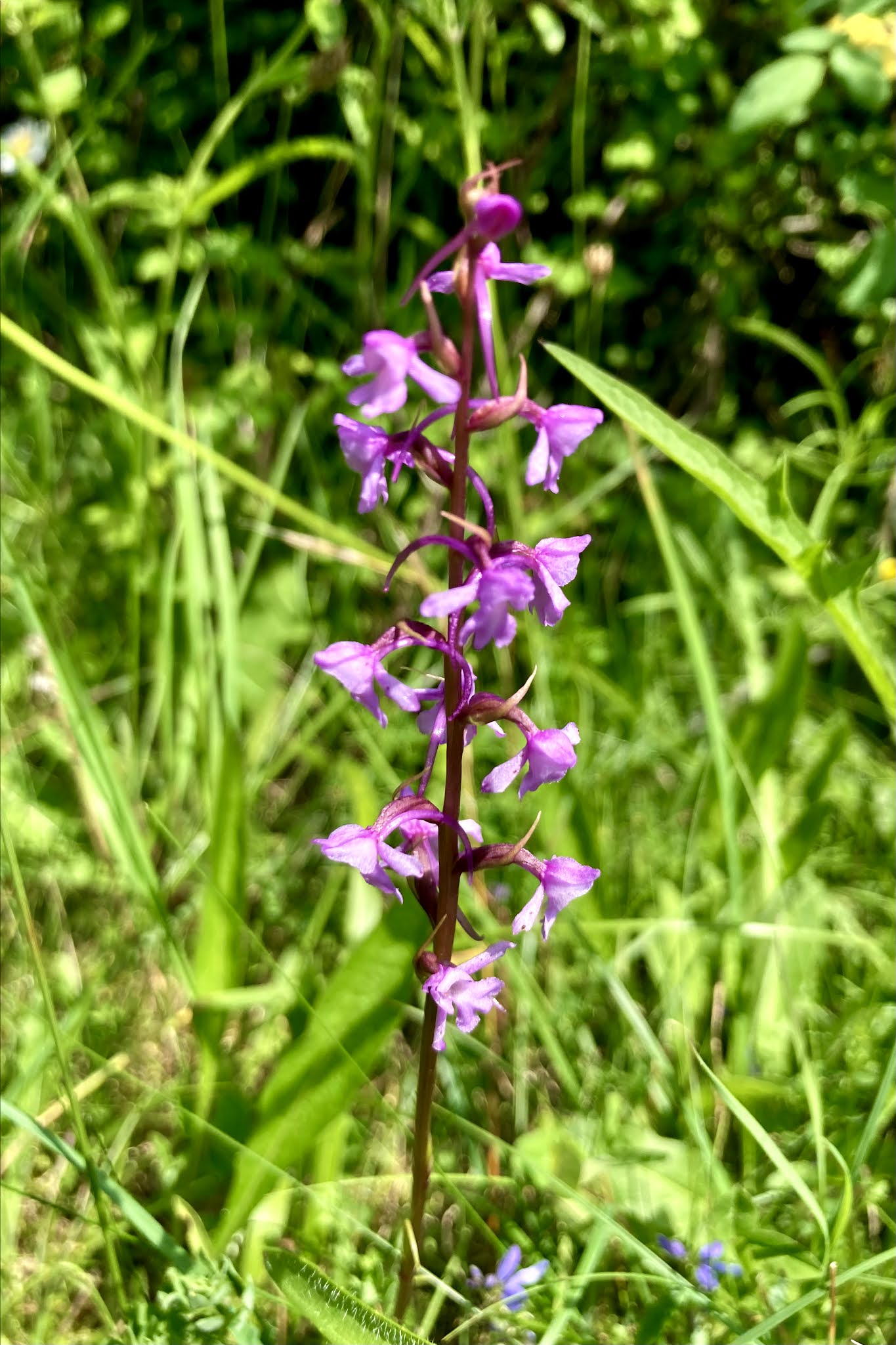
Chalk Fragrant Orchid
(Gymnadenia conopsea)

Common Spotted-Orchid
author's back garden

Tuesday, 17 August 2021

Adventures in Orchidaceae pt 8 .. upon a Chalk Hill ..

St Hubert's of Idsworth

The day started with a pilgrimage to, and a guided meditation, within the grounds of the exquisite St Hubert's of Idsworth.

The church is surrounded by a wide belt of wildflower meadow, whose beckoning of flora and butterflies was somewhat distracting - given the main purpose of my visit.

Spiritually refreshed, I headed to Noar Hill in the search for Musk orchid (Herminium monorchis) and Frog orchid (Dactylorhiza viridis), I could not find the latter, but once my eye was in on the musk orchid I was pleasantly surprised by its abundance - finding its short, pale spikes throughout much of the short grassland of the quarried centre of the hill.

Whilst the location of the frog orchids remained elusive I thoroughly enjoyed the supporting cast of orchids I encountered: common spotted-orchid (Dactylorhiza fuchsii), although very much over; Pyramidal orchid (Anacamptis pyramidalis), and chalk fragrant-orchid (Gymnadenia conopsea) again edging heavily toward seed.

This hill always keeps giving when you start looking through the turf. However, today was not the day for wider scrutiny, not the time to get bogged down with the effort to observe and record everything that I could find and name.

My mood of late had been in desperate need of lightening. This combination of pilgrimage, meditation and a new orchid species to observe - was the uplift that I so very much needed and I left the hill in high spirit.

Musk orchid

Common spotted-orchid

Pyramidal orchid


Chalk fragrant-orchid

Musk orchids


Noar Hill

Sunday, 6 June 2010

Orchid orgy at Noar Hill

Taking a much needed break from revision we headed to Noar Hill (Nr Selbourne) this afternoon for some wild orchid action and we were not disappointed.

Alison had already scoped the site yesterday, having been  given the local tour by Mike the HWT warden following the setting up of a new dormouse (Muscardinus avellanarius) monitoring site which involved erecting dormouse nesting boxes in suitable habitat.


I was completely unprepared for the quality of orchid we found, and mesmerised by the beauty, intricacy and evolution of these plants.

The fly orchid (Ophrys insectifera) a plant of varied habitat (open woodland, glades and rides) found growing on calcareous and limestone soils. Associated in southern England with the grassland of old pits, quarries and spoil heaps; and more or less confined to the North and South Downs.

The plant is pollinated by male digger wasps (Sphex sp) who are attracted to the flower by its shape, texture and the pheromones which it releases. We found seven flowering plants within a 5 x 5 square metre area.


fly orchid (Ophrys insectifera) top photograph courtesy Alison Hogan, middle and bottom photograph Author
A single specimen of the variation green fly orchid (Ophrys insectifera ochroleuca) was also found:

green fly orchid (Ophrys insectifera ochroleuca) both photographs Author

The common spotted orchid (Dactylorhiza fuschsii), in keeping with it's name, was noted across the whole of the site with specimens in various stages of condition:

common spotted orchid (Dactylorhiza fuschsii) courtesy Alison Hogan

A fourth orchid sp (which we failed to identify) was also noted in several places:

 
(unidentified orchid) courtesy Alison Hogan

Other plant spp of interest on the day were the common twayblade (Neottia ovata):


and the flea sedge (Carex pulicarus) a plant which is both scarce and declining in lowland Britain; and according to a local botanist that we met, went missing from the site from it's last record in the early 1900's until it's very recent reappearence:

flea sedge (Carex pulicarus) Author