Showing posts with label Hazleton Common. Show all posts

Saturday, 27 February 2021

Hazleton Common - first spring visit

Some early spring action captured at Hazleton Common during a Lockdown "STAY LOCAL" walk and exercise. It's great to have such natural beauties inhabiting a site that is within a brisk walk of home.
Adder (Vipera berus)

Common lizard (Zootoca vivipara)

Palmate newt (Lissotriton helveticus)

Comma (Polygonia c-album)

Also seen brimstone (Gonepteryx rhamni), peacock (Aglais io), 7-spot ladybird (Coccinella septempunctata) and Buff-tailed bumblebee (Bombus lapidarius).

Sunday, 24 February 2019

.. "Go Wild in the Country .."

"Wild, Go wild, Go wild in the country
Where snakes in the grass are absolutely free"

Dave Barbarossa, Leigh Gorman, Malcolm McClaren & Matthew Ashman 1981

With the shift in day time temperatures over the past week - I have been very keen to get some early reptile sightings under my belt - and have consequently made two visits to Hazleton Common, in the hope of catching up with the local populations.

Conditions on Sunday 17th Feb looked good over the late morning and lunchtime - but despite extensive searches in known "hot spots" I drew a blank for reptiles. However, I did get my first year's sighting of newt spp. with at least three animals being seen in one of the smaller of the three ponds - probably Lissotriton helveticus - although I was not entirely convinced when reviewing the pretty dreadful record shot?.


Sightings of brimstone (Gonepteryx rhamni) and comma (Polygonia c-album) added interest along with several bumblebees.

Returning today for a couple of hours in bright sunshine with temperatures heading north of 14 deg C before mid-day I was more than confident that we would find our quarry. The usual areas on the northern half of the site drew a complete blank - despite the warm air temperature the artificial refugia were cold and damp to the touch - the leaf litter and dead bracken surrounding them feeling much warmer.

Early on - we struck lucky and found a grass snake (Natrix helvetica) basking in a recently cleared area within the bramble (Rubus fruticosus).

Grass snake

In the southern half of the site - we failed to find any more reptiles on our first sweep of the usual areas. So explored the ponds again for newts and this time found them in all three of ponds. The western pond being most productive with double figures being seen beneath the murky surface - a couple of dodgy record shots later, and I remain reluctant to take them to species.


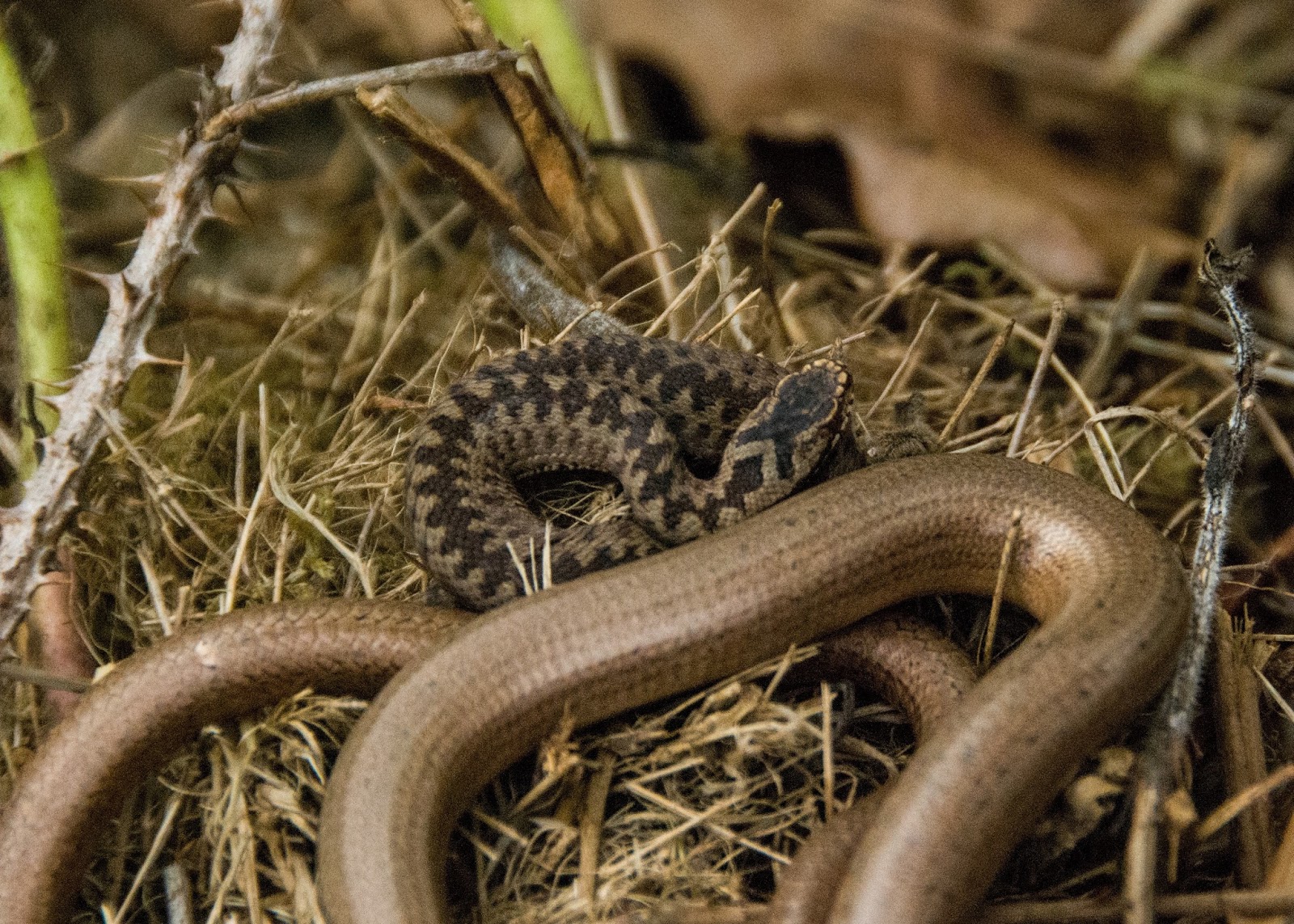
As we headed back - I rechecked the margins of vegetation around a refugia - and found a second snake, inadvertently flushing it as I took a photograph. On the briefest of views I identified it as a grass snake, and it was only at home later - reviewing the picture that I realised that it was a melanistic adder (Vipera berus), which was subsequently verified by Mark one of the local Horndean Parish Rangers.

Adder

On this second visit the numbers of brimstone on the wing had increased with at least six individuals seen, singles of peacock (Aglais io) were also noted at Hazleton Common and Dell Piece West.

Saturday, 7 April 2018

Thursday, 10 August 2017

"In search of Dukes and Black Adders" - May 28th 2017

Our good friend Ian has blogged about a shared day that we spent exploring local sites to Horndean, Hampshire in search of butterflies and reptiles. Ian's blog entry can be found here:

Mammal Watching Birder

Monday, 13 March 2017

Spring distraction, Hazleton Common

Today's weather forecast was more than promising; sunshine / partially cloudy with temperature up to 13oC, light winds albeit NW so would feel a little cooler.

A visit to Hazleton Common between 10:30 and 13:15 produced some rewarding spring encounters, including three adder (Vipera berus) , and singles of common lizard (Zootoca vivipara) and grass snake (Natrix natrix) all seen basking. The former included a pair of "black adder" entwined, and then shortly afterward basking in proximity.


adder

The grass snake did not wait around to be photographed. However, whilst skulking in the hope of the beast re-emerging from the bracken, I noted a common lizard and a dark-bordered (dark-edged) bee fly (Bombylius major).

common lizard
dark edged bee fly

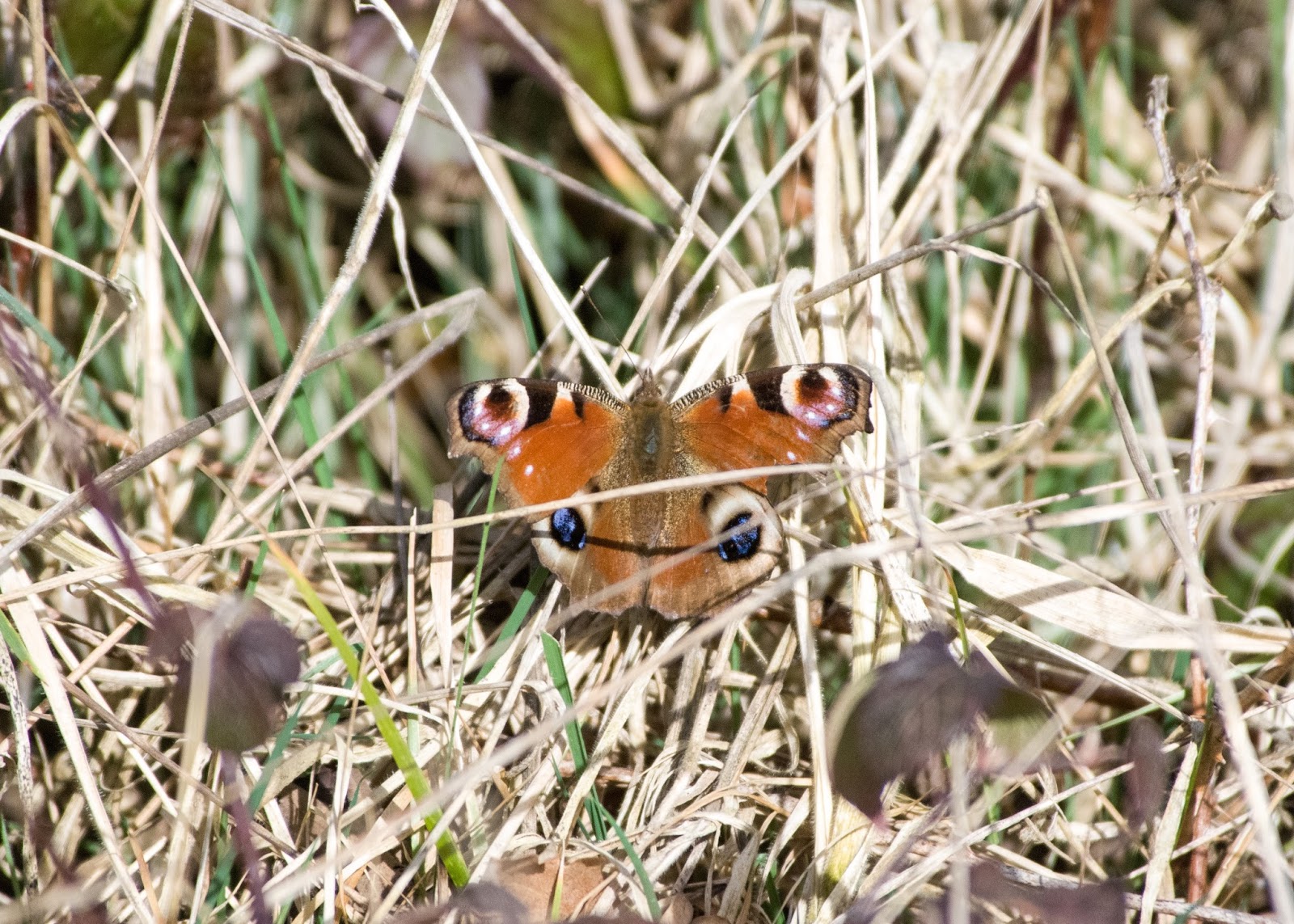
Brimstone (Gonepteryx rhamni) and peacock (Aglais io) butterflies were on the wing - the peacocks already territorial, I witnessed a couple of dog fights, and got buzzed several times by at least two of them. There were a number of different bees on the wing too, at best my ID ran to white-tailed bumblebee (Bombus lucorum) and a possibly quite early? red-tailed bumblebee (Bombus lapidarius).

peacock

Whilst the A3M dominated the soundscape, chiffchaff (Phylloscopus collybita) and dunnock (Prunella modularis) tried their best to sing above it.

Saturday, 4 March 2017

My first Adder (Vipera berus L.) sighting of the year

Despite an unpromising weather forecast, I took a quick trip to Hazleton Common, hoping to catch a reptile or two to kick start my year list. Arrived 11:00ish and scouted around the northern part of the common which felt too wet and cold underfoot to be viable for sightings. On the more heathy southern end the higher ground was dryer, but still cold, with an unexpectedly biting wind under passing cloud cover.

I was just about to leave, when the sun broke through to clear sky, the wind dropped and the temperature improved by all of a whole two degrees perhaps? I waited for about 5 mins in the sunshine then returned to an area, which had been productive on past visits. I was chuffed to get onto a single male adder basking in the open, in close proximity to an artificial refugia. A couple of hasty shots with the "long Tom" for the record, and I left it alone. Lunch beckoned. Heading slowly off site, I failed to connect with any other individuals.

Saturday, 24 September 2016

Hazleton Common, Horndean - a cracking site for reptiles!

I have visited Hazleton Common (LNR) three times between the 18th and 24th Sept - primarily on the lookout for reptiles and in particular the notable population of "black adder" (Vipera Berus) which are recorded here.

The site is just shy of 16 hectares, containing large areas of open "acid grassland", three ponds, waterlogged grassland and a couple of small areas of ancient woodland. Described as a "habitat in transition" the acid grassland has been managed to promote gorse and heather (Horndean Biodiversity Action Plan). These two plants can be found in particular towards the southern end of the site, as you walk towards the ponds.

The site contains four of the six native species of reptile, and the largest pond has records for great crested newt (Triturus cristatus) (Horndean Biodiversity Action Plan).

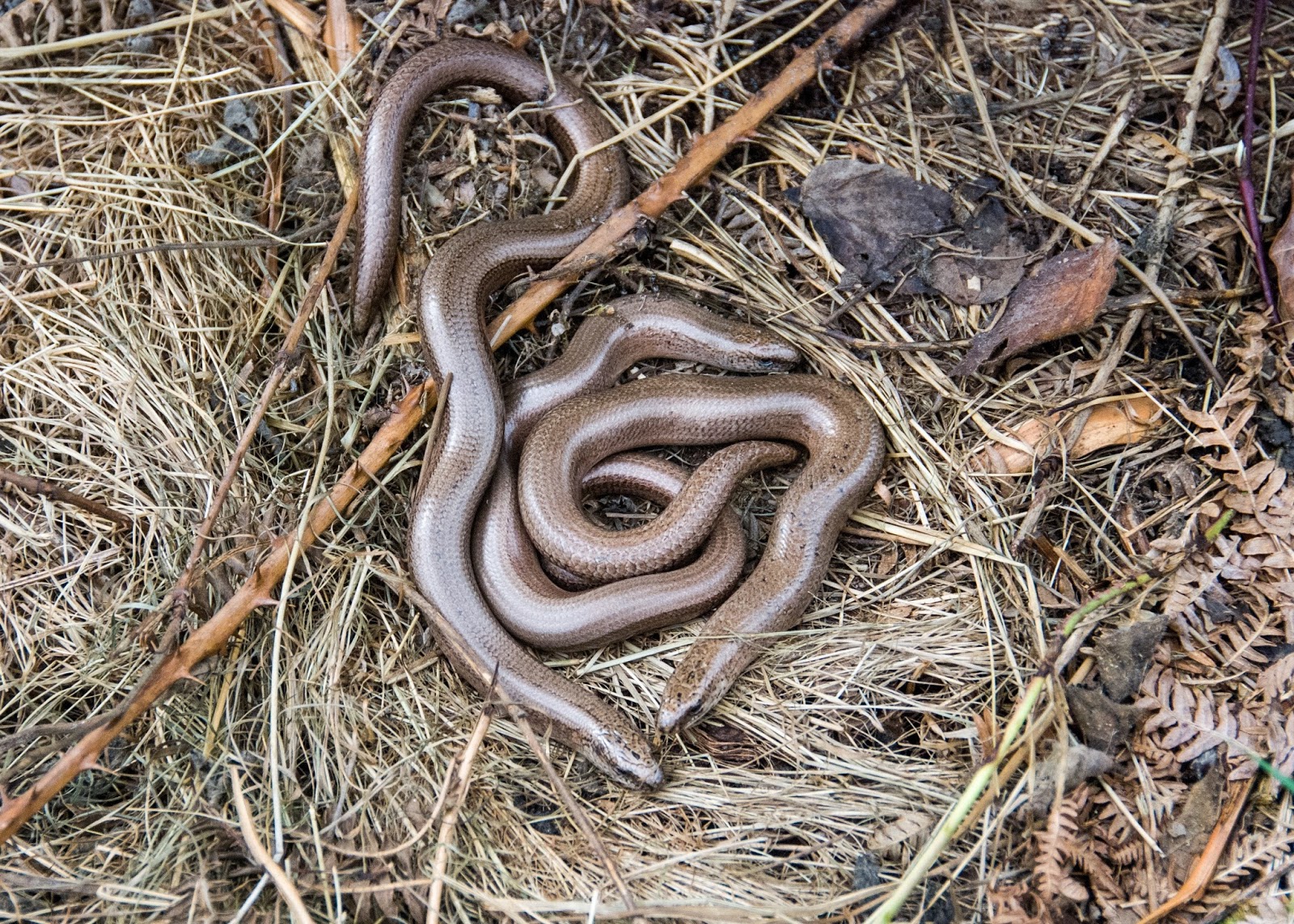
I found all four reptile species, but did not look for the GCN. Only a single black adder was seen on the 24th. By the end of the three visits I encountered a minimum of 8 slow worm (Anguis fragilis), 2 grass snake (Natrix natrix), 5 adder and a couple of common lizard (Lacerta vivipara). A good haul, although I have to be content with a single record shot of the black adder, as it disappears into bramble scrub.

slow worm
common lizard
Adder
heather (Calluna vulgaris)
black adder (record shot)

the three ponds

small copper (Lycaena phlaeas)

speckled wood (Pararge aegeria)

Other mobile species noted over the course of the visits included: small copper and speckled wood butterfly; ruddy darter (Sympetrum sanguineum) and southern hawker (Aeshna cyanea).

Bibliography

Horndean Biodiversity Action Plan can be found at: Horndean Biodiversity Action Plan

Horndean Biodiversity Group can be found at: Horndean Biodiversity Group